
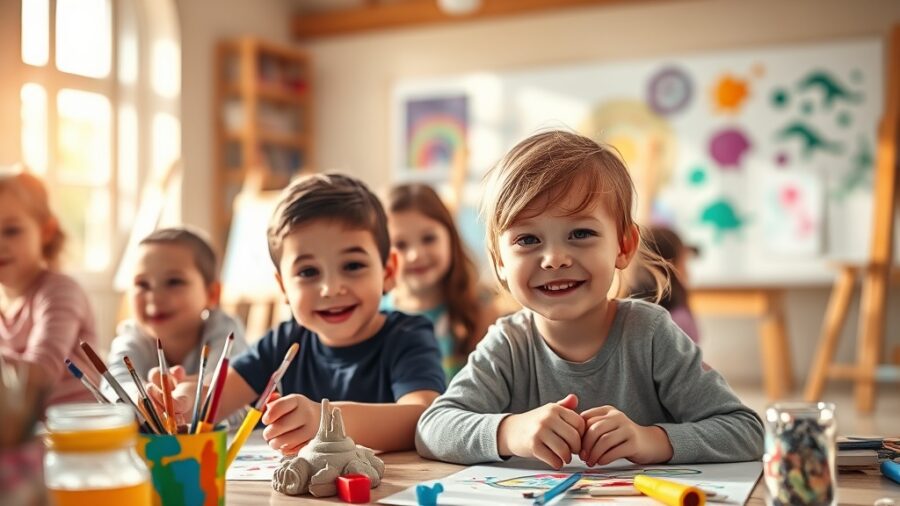
Art Education and Creativity Development: Unleashing Potential
Art education plays a crucial role in fostering creativity development among students. In an increasingly competitive world, the ability to think creatively is becoming more valuable than ever. This article explores the profound impact of art education on creativity, cognitive skills, emotional development, and social skills enhancement. Readers will gain insights into the importance of integrating art into educational curricula and how it serves as a catalyst for holistic development.
As we delve deeper, we will discuss how art education can transform not only the academic landscape but also the personal growth of students. By engaging with various art forms, students learn to express themselves, solve problems, and work collaboratively, skills that are essential in today’s society. This article aims to highlight the multifaceted benefits of art education, backed by research and practical examples.
Moreover, we will address the significant role that art can play in cognitive development and emotional intelligence. The intersection of art and education is a vibrant area that deserves attention, particularly as educators seek to create well-rounded individuals. Join us on this exploration of art education and its capacity to nurture creativity and development in students.
Importance of Art Education in Schools
Enhancing Academic Performance
Art education is often perceived as a supplemental subject in schools, yet its influence on overall academic performance is substantial. According to a report by the Arts Education Partnership, students involved in arts education score better on standardized tests compared to their peers who do not engage in similar programs. For instance, a study conducted in 2019 by the National Endowment for the Arts revealed that students who participated in arts education had a 20% higher chance of achieving proficiency in reading and math.
This correlation suggests that art education fosters critical thinking and problem-solving skills, which are transferable to other academic disciplines. Schools that prioritize art education often see enhanced student engagement and motivation, leading to better attendance and lower dropout rates. The integration of creative subjects into the curriculum not only enriches students’ educational experience but also prepares them for future challenges.
Fostering Cultural Awareness
Art education serves as a bridge to understanding diverse cultures and perspectives. Through studying various art forms, students gain insights into different cultural heritages and histories, fostering empathy and respect for diversity. This cultural awareness is particularly important in today’s globalized society, where collaboration across cultures is increasingly common.
Schools that incorporate multicultural art education into their programs enable students to explore and appreciate the richness of global traditions. Programs like “Artist in Residence” allow students to work with local artists from various backgrounds, creating an immersive learning environment that emphasizes collaboration and understanding. As students engage in these experiences, they learn to value diversity and develop a broader worldview.
How Art Education Enhances Creativity Development
Encouraging Innovative Thinking
Art education is fundamentally about encouraging innovative thinking. When students engage in artistic practices, they are not just creating; they are experimenting, making choices, and learning from failures. This process of exploration is essential for developing creativity, as it teaches students to approach problems from multiple angles and think outside the box.
Programs like the Young Audiences Arts for Learning initiative have demonstrated that integrating arts into education promotes innovative thinking. Students who participated in this program reported increased confidence in their creative abilities and a greater willingness to take risks in their work. The skills developed through art education, such as brainstorming, ideation, and iterative design, are crucial for success in various fields, including science, technology, engineering, and mathematics (STEM).
Building Problem-Solving Skills
Another significant benefit of art education is its impact on problem-solving skills. Engaging in artistic endeavors requires students to confront challenges and navigate obstacles creatively. For example, when students work on a painting or sculpture, they often encounter unexpected issues that require them to adapt their approach. This experience translates into stronger problem-solving skills that are applicable in all areas of life.
Research indicates that students involved in the arts are more likely to develop resilience when facing challenges. A 2021 study by the Arts Education Partnership found that 85% of students who participated in art programs reported increased adaptability and resourcefulness. These qualities are essential not only in academic settings but also in real-world scenarios, equipping students to tackle complex problems effectively.
Influence of Art Education on Cognitive Skills
Enhancing Memory and Concentration
Art education has a profound influence on cognitive skills, particularly in areas such as memory and concentration. Engaging in artistic activities stimulates various brain regions, enhancing neural connections that are vital for memory retention. A study published in the Journal of Neuroscience in 2020 found that students who regularly participated in art programs demonstrated improved memory recall compared to those who did not.
Furthermore, art education encourages sustained attention and focus. When students are immersed in a creative project, they learn to concentrate for extended periods, which is beneficial for their academic pursuits. This heightened level of concentration can lead to better performance in subjects that require intense focus, like mathematics and science.
Improving Critical Thinking Skills
Art education also fosters critical thinking skills, as it encourages students to analyze and evaluate their work and the work of others. Through critiques and discussions, students learn to articulate their thoughts, providing them with the ability to assess various viewpoints and make informed decisions.
Schools that implement structured art critique sessions often see marked improvements in students’ analytical skills. For instance, the National Art Education Association emphasizes the importance of critique in art education as a means of developing critical thinking. Students learn to question assumptions, evaluate evidence, and reason logically, skills that are essential for academic success and informed citizenship.
The Role of Art in Emotional Development
Expression of Emotions
Art education provides a unique platform for emotional expression, allowing students to convey feelings that may be difficult to articulate verbally. Through various art forms, students can explore complex emotions, enhancing their emotional intelligence. A study by the American Psychological Association in 2018 found that students involved in art programs reported higher levels of emotional well-being and self-awareness.
Moreover, engaging in artistic activities can serve as a therapeutic outlet for students facing challenges, such as stress or anxiety. Art therapy programs in schools have demonstrated effectiveness in helping students cope with emotional difficulties. By providing students with the tools to express their emotions creatively, art education fosters resilience and emotional understanding.
Building Self-Confidence
Participation in art education significantly contributes to building self-confidence in students. As students create and showcase their work, they receive positive reinforcement from peers and teachers, boosting their self-esteem. This affirmation encourages them to take pride in their creativity and abilities.
Many schools host art exhibitions and performances, providing students with opportunities to present their work to a broader audience. These experiences not only validate their efforts but also instill a sense of accomplishment. According to a survey conducted by the National Arts Council, 78% of students involved in art programs reported increased confidence in their creative skills, which positively impacts their overall self-image.
Art Education and Social Skills Improvement
Collaboration in Artistic Projects
Art education inherently involves collaboration, whether through group projects, performances, or exhibitions. Working together on artistic endeavors teaches students valuable social skills such as communication, teamwork, and empathy. These collaborative experiences are crucial for developing interpersonal skills that are vital in both academic and professional settings.
For instance, a program implemented by the Kennedy Center for the Performing Arts encourages students to collaborate on theater productions, fostering a sense of community and shared responsibility. Students learn to listen to one another, negotiate ideas, and support their peers, skills that are transferable to other areas of their lives.
Enhancing Communication Skills
Engaging in art education also enhances communication skills. Students learn to articulate their thoughts and feelings through their artwork and discussions about art. This practice not only boosts verbal communication abilities but also hones non-verbal communication skills, which are essential for building relationships.
Research from the National Endowment for the Arts shows that students who participate in art education programs demonstrate improved communication skills compared to their peers. They learn to express themselves clearly and effectively, a competency that is invaluable in every aspect of life, from personal relationships to professional interactions.
Conclusion: The Lasting Impact of Art Education
The integration of art education into school curricula is essential for fostering comprehensive development in students. From enhancing creativity and cognitive skills to supporting emotional and social growth, art education plays a vital role in shaping well-rounded individuals. As we have explored, the benefits of art education extend far beyond the classroom, equipping students with the tools they need to succeed in an ever-changing world.
As educators, parents, and community members, it is our responsibility to advocate for the inclusion of art education in schools. By prioritizing creativity and artistic expression, we can ensure that future generations are not only academically proficient but also emotionally intelligent and socially adept. The lasting impact of art education is undeniable, and its value in fostering creativity development should not be overlooked.
FAQ about Art Education and Creativity Development
1. What is the main benefit of art education for students?
The main benefit of art education for students is its ability to enhance creativity development. Through artistic activities, students learn to think critically, solve problems, and express themselves, which are all essential skills in today’s world.
2. How does art education improve cognitive skills?
Art education improves cognitive skills by enhancing memory, concentration, and critical thinking abilities. Engaging in art stimulates various brain regions, leading to better academic performance and problem-solving capabilities.
3. Can art education positively affect emotional well-being?
Yes, art education can positively affect emotional well-being by providing a platform for self-expression. Students can explore and articulate their emotions through art, leading to increased self-awareness and resilience.
4. How does art education promote social skills?
Art education promotes social skills by encouraging collaboration and communication among students. Working together on artistic projects teaches students valuable interpersonal skills that are crucial for building relationships.
5. Why is it important to include art education in school curricula?
Including art education in school curricula is important because it fosters holistic development in students. It enhances creativity, cognitive skills, emotional intelligence, and social abilities, preparing students for success in various aspects of life.
Recap of Key Points
- Art education significantly enhances creativity development in students.
- Participation in art programs correlates with improved academic performance.
- Art education fosters emotional intelligence and self-confidence.
- Engagement in artistic activities improves cognitive skills such as memory and critical thinking.
- Collaboration in art projects enhances social skills and communication abilities.
- Art provides a unique platform for cultural awareness and empathy.
- Advocating for art education is essential for nurturing well-rounded individuals.
- The lasting impact of art education transcends the classroom, influencing all areas of life.