
Introduction
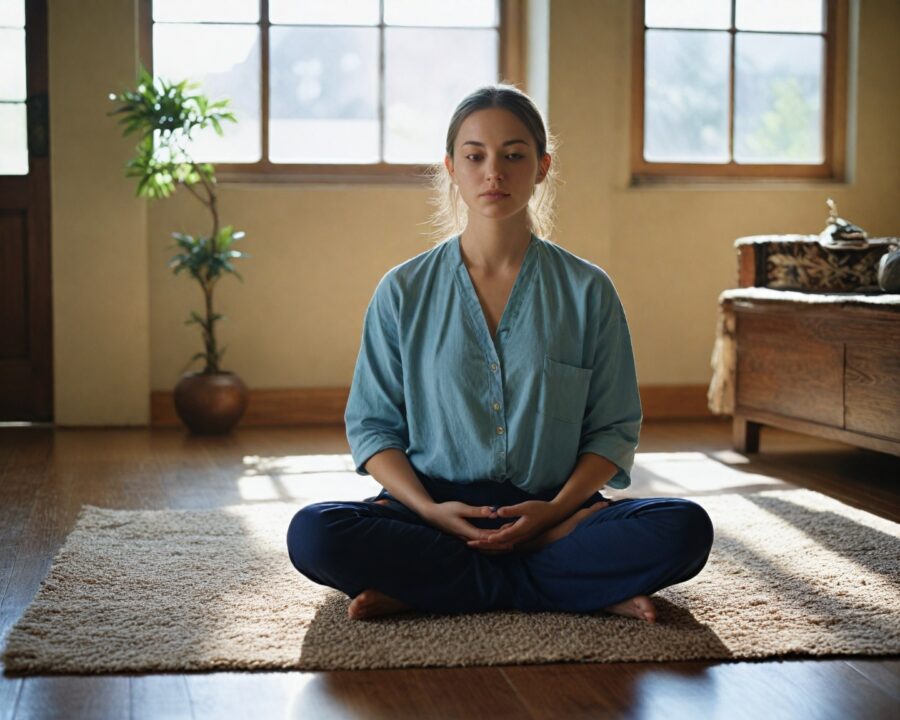
Meditation, for many, evokes images of monks in robes or serene individuals adopting a lotus position under a tranquil tree, deeply engrossed in spiritual awakening. However, this practice need not be cloaked in the mysticism often associated with it. Meditation can be stripped of spiritual connotations and embraced as a practical tool for enhancing mental clarity, focus, and overall well-being. For those uninterested in or detached from spiritual beliefs, secular meditation offers an accessible pathway into mindfulness without the necessity of spiritual immersion.
This approach to meditation focuses on the mental and physical benefits of the practice, applying simple techniques that can be incorporated into daily life. By understanding meditation in a non-spiritual context, individuals can explore mindfulness purely for its scientifically backed benefits. Whether you’re seeking respite from the stresses of daily life or looking for ways to improve your focus and mental well-being, secular meditation can be a straightforward and adaptable solution.
Understanding Meditation Without Spiritual Context
Secular meditation disassociates itself from the traditional religious and spiritual affiliations commonly linked with meditation. This form of meditation focuses entirely on its tangible benefits, such as stress reduction, enhanced concentration, and improved emotional health. It is about being present and aware of the moment without invoking any spiritual philosophies or dogmas.
Meditation in its secular form can be seen through the lens of neuroscience and psychology, offering insights into how the mind works. This approach makes meditation approachable for skeptics or those firmly grounded in scientific understanding rather than spiritual or religious belief. It involves techniques like mindfulness, breathing exercises, and visualization, which are backed by scientific research demonstrating their effects on mental health.
By reframing meditation as a tool for mental enhancement rather than spiritual enlightenment, secular meditation enables a wider audience to experience its benefits without needing to subscribe to a particular set of beliefs. It opens the door for everyone to explore mindfulness practices on their own terms.
Benefits of Meditation for Mental Clarity and Focus
Meditation, irrespective of spiritual context, has incredible benefits for mental clarity and focus. Scientific studies reveal that regular practice can lead to notable improvements in attention span and cognitive function. By engaging in meditation, individuals can train their minds to remain in the present moment, reducing the constant chatter and distractions that often cloud thought processes.
One of the most significant benefits of secular meditation is its impact on stress reduction. As stress is a major impediment to productivity and concentration, meditation helps mitigate its effects, thereby promoting mental clarity. When the mind is calm and centered, decision-making and problem-solving skills improve, and individuals can focus on tasks longer with greater efficiency.
Furthermore, meditation promotes emotional regulation, allowing for better control over one’s responses to stressors. This heightened emotional awareness and control contribute to overall mental well-being, and in turn, help foster a clear mental state ready to tackle everyday challenges.
How Secular Meditation Differs from Traditional Practices
Secular meditation strips away the spiritual elements typically associated with traditional meditation practices. While traditional meditation methods often focus on spiritual enlightenment and transcendence, secular meditation emphasizes practical techniques aimed at improving mental and emotional well-being.
Traditional practices might involve rituals, chants, or adhering to specific spiritual teachings, whereas secular meditation focuses on techniques like breathwork, body scanning, and mindfulness-based stress reduction. It does not require any particular belief system; instead, it encourages individual exploration of what works best, free from the trappings of spiritual disciplines.
Another distinct difference lies in the language and instructional techniques. Secular meditation often uses terminology grounded in neuroscience and psychology rather than spiritual or mystical language. This shift in perspective makes meditation more accessible to those who identify as non-religious or skeptical of spiritual ideologies, positioning it as a universally applicable skill.
Common Misconceptions About Meditation and Spirituality
There are numerous misconceptions that equate meditation strictly with spiritual or religious practices, potentially deterring those who shy away from spiritual systems. One common misconception is that meditation requires one to adopt a specific cultural or religious identity. In secular meditation, this is not the case, as anyone can practice irrespective of their background.
Another prevalent misconception is that meditation is all about emptying the mind. In reality, secular meditation is more about awareness and acceptance of the thoughts that arise rather than trying to banish them entirely. It’s about acknowledging those thoughts and emotions without judgment.
Moreover, some believe that effective meditation demands years of practice or the ability to sit in silence for extended periods. However, even short, regular sessions can bring substantial benefits. A few minutes of focused breathing or mindfulness can be immensely impactful without necessitating extensive time commitments or advanced abilities.
Simple Breathing Techniques for Beginners
Breathing techniques form the cornerstone of meditation, offering a simple entry point for beginners. Focusing on the breath helps anchor the mind, providing a straightforward method to start reaping meditation’s benefits without spiritual engagement.
One easy technique is the “4-7-8” breathing exercise. In this method, inhale through the nose for a count of four, hold the breath for seven counts, and exhale slowly through the mouth for an eight count. This technique can be practiced anywhere and helps calm the mind and reduce stress.
Another approach is the “box breathing” technique. Inhale for four counts, hold the breath for another four counts, exhale for four counts, and pause after exhaling for four counts before repeating the cycle. These simple, structured breathing exercises create a rhythmic focus, which is effective for grounding the mind.
Practicing mindful breathing—where one focuses exclusively on the breath and the sensations associated with it—is also beneficial. By cultivating an awareness of how the breath moves through the body, beginners can enhance their mindfulness skills, contributing to improved mental clarity.
How to Create a Meditation Routine that Works for You
Creating a meditation routine is about finding the right balance and consistency that fits seamlessly into your lifestyle. Start by determining the best time for you to meditate. Some people prefer morning sessions to start the day with a clear mind, while others find solace in ending the day with evening meditations.
Set realistic goals that suit your schedule and motivation levels. If your day feels too crammed for a lengthy session, commit to five-minute breaks where you practice mindful breathing or a quick meditation exercise. The consistency of practicing, even if briefly, is more important than duration when building a habit.
Ensure the space where you meditate is conducive to focus and peace. It need not be elaborate; a quiet, comfortable spot free from distractions, perhaps with a cushion or chair, can suffice. Gradually, as meditation becomes a familiar part of your routine, you can experiment with longer sessions or different techniques to enhance your practice.
Overcoming Challenges When Meditating Without Spiritual Beliefs
Meditating without attaching spiritual beliefs may present unique challenges, particularly relating to motivation and expectation management. Those practicing secular meditation might struggle with staying motivated without a defined spiritual path guiding them. It’s crucial to set personal goals that highlight the practical benefits, such as improved focus or stress reduction.
Another challenge is managing the expectations of immediate outcomes. Unlike guided spiritual meditation promising transcendence or enlightenment, the results of secular meditation can be subtle and may take time to become apparent. Embracing patience and persistence is key, as the changes often manifest gradually.
Lastly, those accustomed to instant gratification might find the practice challenging due to its introspective nature. Start with smaller, manageable sessions and gradually build up to more extended periods. Recognize that meditation is a skill that develops over time, and focus on the incremental progress to maintain motivation.
Practical Tools and Apps for Secular Meditation
In today’s digital age, numerous practical tools and apps have emerged to support secular meditation practices. These resources can guide beginners and seasoned practitioners alike, offering structured programs and reminders to keep meditation part of one’s daily routine.
| App Name | Features |
|---|---|
| Headspace | Guided meditations, mindfulness techniques, meditation courses |
| Calm | Sleep stories, music, breathing programs, daily meditations |
| Insight Timer | Timer, discussion groups, courses, guided meditations |
| 10% Happier | Introductory courses, expert guidance, meditation app for skeptics |
These apps provide libraries of guided meditations, ranging from stress reduction to improving focus. With visualizations, breathwork exercises, and the ability to track progress, they offer a supportive framework for those practicing secular meditation. Many of these tools are designed to break down the barrier of complexity, making meditation accessible to everyone.
Real-Life Examples of Successful Non-Spiritual Meditation
Numerous individuals have adopted secular meditation practices with impressive results, showcasing its effectiveness beyond spiritual contexts. For instance, Silicon Valley executives known for high-pressure roles have turned to secular meditation to boost productivity and maintain mental clarity, divorcing the practice from traditional spiritual roots.
Another example is in the realm of education, where schools have implemented mindfulness programs without attaching spiritual teachings. These programs have shown success in enhancing students’ attention spans and reducing anxiety, equipping young minds with tools to manage stress effectively.
Athletes, too, are reaping the benefits of non-spiritual meditation. Professional sports teams incorporate mindfulness practices into their training regimens to improve focus, resilience, and performance under pressure. These instances highlight how secular meditation can be effectively integrated into various facets of everyday life without necessitating spiritual engagement.
Next Steps: Incorporating Meditation into Daily Life Effectively
Integrating meditation into daily life requires intentional planning and a willingness to adapt practices to fit personal preferences and schedules. Begin by selecting a specific time each day to dedicate to meditation, treating it like any other crucial appointment. This consistency helps cultivate a routine.
Consider pairing meditation with another daily habit. For instance, start your sessions immediately after brushing your teeth in the morning, or conclude your night with a short sitting just before sleep. This coupling of activities can reinforce meditation as part of your everyday routine.
Finally, remain flexible and open to experimentation to find what resonates most harmoniously with you. Whether through apps, classes, or solo practice, identify what supports your goals and keep the experience enjoyable and rewarding. The key is to make meditation an enriching part of your life rather than an added chore.
FAQ
What is secular meditation?
Secular meditation is a practice of mindfulness and meditation techniques stripped of any spiritual or religious connotations. It focuses on the practical benefits of meditation for mental clarity, focus, and stress reduction.
Can anyone practice secular meditation?
Yes, anyone can practice secular meditation as it does not require adherence to any spiritual belief systems. It is accessible to all, regardless of one’s background or personal beliefs.
Is it necessary to sit in a particular position to meditate?
No, it is not necessary to sit in a specific position. Sitting comfortably on a chair or cushion with a straight spine is sufficient. The focus should be on comfort and maintaining alertness.
How long should beginners meditate?
Beginners can start with as little as five to ten minutes a day and gradually increase the duration as they become more comfortable with the practice. Consistency is more important than the length of time.
Do I need to meditate at the same time every day?
While meditating at the same time daily can help establish a routine, it is not necessary. The key is to find a time that consistently works for you and fits into your schedule.
What should I do if I find my mind wandering during meditation?
Expecting a wandering mind during meditation is normal. Rather than resisting, gently bring your focus back to your breath or chosen point of meditation each time you notice your mind has drifted.
Are there any tools needed for secular meditation?
No specific tools are required, but aids like meditation apps, timers, and comfortable seating can enhance your practice by providing structure and reminders.
How soon can I expect results from meditation?
Results can vary, and while some individuals notice changes in focus and stress levels fairly quickly, for others, it may take weeks of practice. Patience and regular practice are essential for seeing benefits over time.
Recap
This comprehensive guide demystifies meditation beyond the spiritual confines traditionally associated with it, presenting secular meditation as an approachable tool for mental enhancement. We explored various elements including the benefits of meditation for mental clarity and focus, practical breathing techniques, and how secular practices differ from traditional methods. Further, we addressed common misconceptions, tools to facilitate practice, and real-life applications of non-spiritual meditation, underscoring its universal applicability. Overcoming challenges without spiritual guidance and establishing a sustainable routine were also covered, encouraging a personalizable approach to mindfulness.
Conclusion
Meditation, when divorced from spiritual obligations, becomes a versatile and practical method for improving mental health and well-being, making its advantages accessible to a wider demographic. The secular approach to meditation emphasizes pragmatic benefits—enhanced focus, stress reduction, and emotional balance—without anchoring the practice in spiritual practices.
For those who are skeptics of spiritual practices or simply seeking purely the mental health benefits, secular meditation offers a scientifically supported path to mindfulness. It empowers individuals to cultivate a deeper connection with their cognitive processes, allowing for improved clarity and decision-making.
Ultimately, secular meditation represents a journey towards personal enrichment. Through regular practice and the adoption of techniques that align with personal lifestyles and preferences, it paves the way for ongoing personal development and mental well-being, embraced uniquely on one’s terms.