
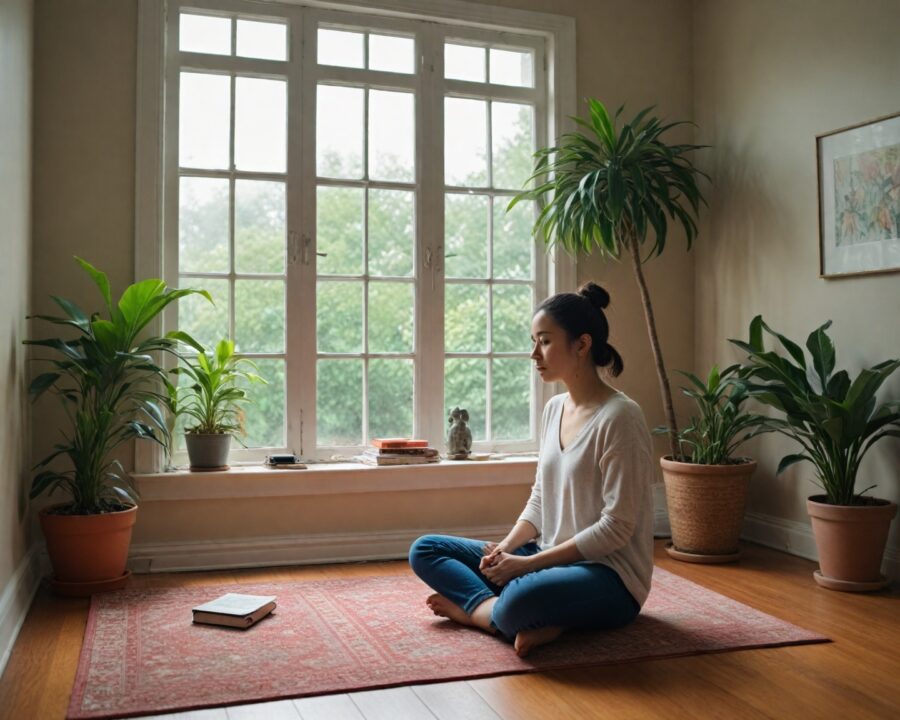
Meditation has become an increasingly popular practice for individuals looking to enhance their mental clarity, reduce stress, and cultivate a sense of inner peace. While meditation classes and retreats are widely available, meditating at home offers a unique blend of convenience and personal growth. However, it also comes with its own set of challenges, particularly in terms of avoiding distractions that could hinder one’s meditative journey. This article will examine how to effectively meditate at home without distractions, offering insights into creating a serene environment and fostering a sustainable meditation practice.
Home meditation can serve as a powerful experience when integrated correctly into one’s daily routine. It allows practitioners the flexibility to engage in their practice at a time and place that suits them best. The catch, however, is that homes are often bustling with activity, noise, and other forms of interruptions that can detract from the experience. By understanding the nature of these distractions and implementing strategies to overcome them, meditators can transform their living spaces into sanctuaries that support their mental and emotional well-being.
Common Distractions During Home Meditation
Meditating in the comfort of one’s home sounds idyllic, yet it can be fraught with distractions. Understanding these potential interferences is the first step towards a conducive meditation practice. Common distractions are generally classified into two categories: external and internal.
External distractions include noises from the neighborhood, household sounds from other family members, or digital interruptions like phone notifications. These elements can break concentration and pull one out of their meditative state. It’s crucial to acknowledge that while we can’t always control external factors, we can prepare ourselves to minimize their impact.
Internal distractions, such as swirling thoughts and emotional disturbances, also play a significant role in disrupting meditation. The nature of meditation involves calming the mind, but that very process often brings submerged thoughts to the forefront. These internal interruptions require mindful attention and strategies to manage them without losing focus.
List of Common Distractions:
- External Noise: Traffic sounds, neighbor’s chatter, household noises.
- Digital Interruptions: Mobile alerts, ringing phones, other electronics.
- Internal Thoughts: Racing thoughts, emotional worries, mental fatigues.
Preparing a Dedicated Meditation Space
Creating a dedicated meditation space within your home goes a long way in reinforcing the tranquility needed for a fruitful session. This space doesn’t require much; a small corner in a room can suffice if it’s crafted with mindfulness. The intention is to develop an environment that signals your mind and body that it’s time for meditation.
Start by choosing a quiet area of your home that receives minimal foot traffic and noise disturbance. Ideally, your meditation spot should be well-ventilated and free from clutter. Use this space exclusively for meditation so it becomes a haven rather than just another part of your living quarters.
Incorporating elements that induce a sense of calm can also enhance your practice. Consider elements like soft lighting, plants, candles, or a small waterfall fountain. Using cushions or mats specific to your meditation posture can also help maintain comfort, enabling longer sessions with less physical distraction.
Techniques to Minimize External Noise
External noise can be a significant barrier when attempting to meditate at home, but with proactive strategies, one can diminish its potential intrusion. The use of headphones to play gentle ambient sounds or binaural beats can help mask disruptive noises, allowing the mind to focus inward.
Timing your meditation sessions strategically is another effective way to avoid noise. Early morning or late evening times can often offer relative peace, as these are typically quieter hours at home and in the neighborhood. Additionally, communicating with family members about your meditation schedule can lead to fewer interruptions, enabling a smooth experience.
Here’s a table that compares different methods to minimize external noise:
| Method | Pros | Cons |
|---|---|---|
| Headphones & Ambient Sounds | Masks noise effectively, portable | Can be distracting if volume changes |
| Timing Meditation | Less noise in early/late hours | Requires scheduling flexibility |
| Family Communication | Mutual understanding reduces interruptions | May not always be possible |
Managing Internal Distractions and Thoughts
Handling internal distractions requires a compassionate and structured approach, as these often reflect deeper aspects of one’s subconscious. Mindfulness and self-awareness are your allies in this scenario. Practicing techniques such as focusing on breath can help in anchoring your thoughts.
When intrusive thoughts arise, rather than suppressing them, acknowledge their presence and gently redirect your focus back to your breath or another focal point of your meditation. The act of acknowledgment without judgment allows for a smoother transition back to the meditative state, aligning both mind and body in harmony.
Moreover, incorporating a mantra-based meditation approach can help in managing persistent thoughts. A mantra provides repetition that anchors the mind, reducing wandering thoughts by giving it a gentle, constant focus. This practice can alleviate the mental effort of repeatedly refocusing, thereby deepening the meditative experience.
Using Guided Meditations for Focus
Guided meditations are an excellent resource for those who require a more structured approach to meditation. Particularly for beginners or those feeling overwhelmed by distractions, a guided session can offer additional focus and direction.
Guided meditations typically involve instructions or affirmations delivered by a narrator. These can be accessed via apps, online platforms, or by downloading them for offline use. Utilizing these resources helps keep your mind aligned with the meditation objectives, motivating you to maintain focus when it might otherwise wander.
They also provide the added benefit of varying content, which can help keep the practice fresh and engaging. From stress reduction and relaxation to enhancing concentration and fostering creativity, tailored guided sessions allow practitioners to target specific areas of personal development.
Incorporating Mindfulness into Daily Routines
To fortify meditation practice, incorporating mindfulness into your daily routines can build a continued awareness that complements your sessions. The essence of mindfulness entails fully engaging with the present moment, thus reducing the cascade of distractions.
Simple practices, such as mindful eating, walking, or even breathing, can be seamlessly integrated throughout the day. This consistency retrains the mind to focus, making it easier to return to that centered state during your meditation sessions.
Moreover, practicing gratitude regularly fosters a positive mental environment that can carry over into meditation. By acknowledging the good in daily life, you can cultivate a sense of appreciation that enhances psychological resilience and mindfulness.
Tips for Staying Consistent with Meditation
Developing a consistent meditation habit takes dedication and strategy. Setting a fixed time each day for meditation can create a routine, making it easier to commit to regular practice.
Tracking progress is another allied tool. Using journals, apps, or logs to record insights and changes over time can provide motivation and accountability. Seeing the benefits manifest can reinforce one’s commitment to maintaining the practice.
Additionally, start with manageable sessions and gradually increase duration as comfort levels rise. It’s more sustainable to begin with 5-10 minutes of daily meditation and increase over time, rather than starting with impractical goals that could lead to frustration.
List of Consistency Tips:
- Set a Specific Time: Integrate meditation into daily schedules.
- Track Progress: Reflect on experiences and benefits.
- Start Small: Gradually extend meditation durations.
Addressing Common Challenges in Home Meditation
Despite best efforts, challenges may arise. Recognizing and addressing these early on can prevent discouragement. One common challenge is the sense that meditation is not “working” or providing immediate results. Meditation is a journey rather than a destination, requiring patience and open-mindedness.
Another challenge involves physical discomfort, which can arise from long sitting sessions. Ensuring a comfortable posture and making use of accessories like cushions or benches can alleviate these issues.
Lastly, a lack of motivation can sometimes hinder consistent practice. Periodically revisiting the reasons behind your meditation practice and the benefits it offers can help rejuvenate dwindling enthusiasm.
Next Steps: Building a Sustainable Meditation Practice
Transitioning from sporadic meditation to a sustainable practice involves both mindset and action. Accepting that meditation is an evolving practice can help set realistic expectations and long-term goals. Personalize your practice by exploring different meditation techniques and finding what resonates most strongly with you.
Seek community or accountability if needed. Joining online groups, virtual classes, or local workshops can provide support and keep you inspired. Having people to share experiences and growth with can solidify one’s dedication and understanding of the practice.
Finally, always be prepared to adapt and evolve your practice as your needs and circumstances change. Flexibility and openness to different approaches ensure that meditation remains a beneficial element of your life.
Frequently Asked Questions
What if I can’t find a quiet space at home for meditation?
Finding complete silence might be challenging, so opt for a space that is less distracting relative to others. You can also create a conducive atmosphere using headphones with ambient or meditative sounds.
Can I meditate lying down?
While meditation is traditionally practiced sitting, lying down is possible, especially for those with physical discomfort. However, be mindful of the tendency to fall asleep in this position.
How long should my meditation sessions be?
Start with short sessions, around 5 to 10 minutes, and extend duration as you become more comfortable. Consistency is more important than duration at the beginning.
Is it necessary to use a mantra during meditation?
Using a mantra is a personal choice and not obligatory. It can help with focus but it’s ultimately up to the meditator to decide what method suits them best.
Can technology aid in my home meditation practice?
Yes, technology via apps and online platforms can offer guided sessions, ambient sounds, and were invaluable for progress tracking.
How often should I meditate?
Daily meditation is ideal to reap consistent benefits, but even a few sessions a week can be impactful.
What if thoughts and distractions continually interrupt my focus?
Acknowledge these disruptions non-judgmentally and redirect your focus gently, possibly through breathing exercises or mantras.
Will I experience immediate benefits from meditation?
Some may notice immediate changes, like calmness after a session, but significant benefits often accrue over time with consistent practice.
Recap of Key Points
- Understand common distractions both external and internal.
- Create a dedicated, distraction-free meditation space.
- Utilize techniques to minimize noise and manage internal thoughts.
- Guided meditations offer structure and variety.
- Incorporate mindfulness into daily routines for seamless focus.
- Employ strategies for consistent practice, like setting regular times.
- Challenges are part of the process; address them with understanding and adaptation.
- Develop a sustainable practice by personalizing meditation methods and seeking community support if needed.
Conclusion
Meditating at home without distractions is not only feasible but can be a highly rewarding practice when approached with intention and flexibility. By setting up a dedicated space, employing techniques to manage both external and internal distractions, and integrating mindfulness into daily life, individuals can create an environment conducive to deep physical and mental relaxation.
This practice not only enhances concentration and emotional well-being but also allows for personal growth through introspection. As you embark on this journey, remember that meditation is a dynamic process. Don’t rush results and allow yourself the grace to evolve within your practice. Embrace the challenges and reap the lasting benefits that a sustained meditation practice at home can truly offer.