
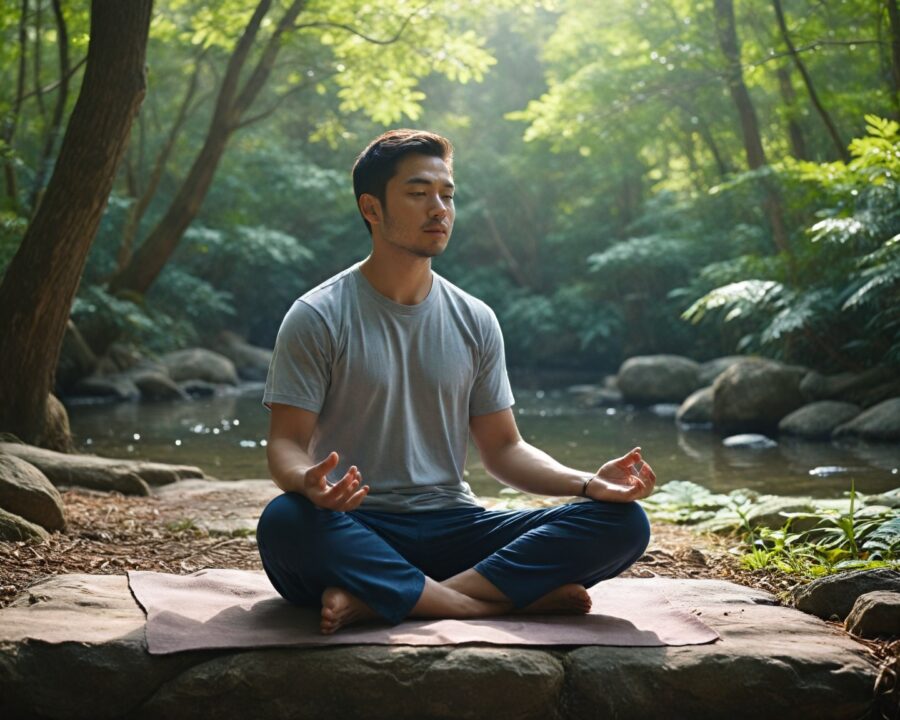
Introduction to meditation without spiritual beliefs
Meditation is often associated with spiritual practices and religious traditions, but it can also be pursued as a secular practice for mental clarity and emotional well-being. This guide will provide a comprehensive overview of how you can meditate without adhering to any spiritual beliefs. By focusing on meditation as a tool for psychological and physical benefits, you’ll be able to cultivate a practice that aligns with your personal beliefs or non-beliefs.
In today’s fast-paced world, meditation offers a refuge from chaos, but not everyone relates to the spiritual connotations sometimes attached to it. For those interested in the practical benefits of meditation without spiritual commitments, understanding how to tailor a practice to fit a non-spiritual framework is essential. This guide aims to demystify meditation and make it accessible to individuals who wish to enjoy its benefits in a secular context.
Benefits of meditation for non-spiritual individuals
Meditation is a practice with far-reaching benefits that go beyond spiritual awareness. For non-spiritual individuals, meditation can be a gateway to improved mental health, offering a way to manage stress, anxiety, and depression. Scientific research has shown that meditation can lead to changes in brain regions involved in perception, awareness, and introspection, making it a valuable tool for enhancing cognitive function.
Moreover, meditation can improve emotional well-being by increasing self-awareness and fostering patience and tolerance. For someone navigating a hectic lifestyle, the ability to pause, reflect, and respond instead of reacting automatically can be a transformative life skill. This emotional resilience can help individuals face personal and professional challenges with composure and clarity.
Physical health benefits are also notable. Regular meditation can reduce blood pressure, decrease pain, aid in sleep, and improve heart health. These benefits highlight meditation’s role as a holistic approach to health, promoting mind-body harmony without necessitating a commitment to spiritual or religious beliefs.
Understanding the difference between spiritual and secular meditation
To better understand how meditation without spiritual beliefs can be practiced, it’s important to distinguish between spiritual and secular meditation. Spiritual meditation often involves elements such as mantras, chakras, or seeking enlightenment, which are tied to a particular set of spiritual frameworks or religious doctrines.
Secular meditation, in contrast, eliminates these spiritual elements and focuses purely on the mental and physical processes involved. Practices such as mindfulness, which involves paying attention to the present moment without judgment, are prime examples of secular meditation. This form of meditation emphasizes focus, awareness, and the cultivation of a calm mind without the trappings of spiritual narratives.
By understanding this distinction, individuals can select meditation practices that align with their values and beliefs. Secular meditation provides the flexibility to integrate mindfulness into everyday activities, such as eating or walking, thus making it accessible and practical for daily life without requiring a spiritual context.
Common misconceptions about meditation and spirituality
Despite meditation’s accessibility, there are several misconceptions that may deter individuals from pursuing it. One common misconception is that meditation is intrinsically linked to spirituality or religion, leading many to believe that it is not suitable for those without spiritual beliefs. This is a significant barrier as it causes individuals to overlook meditation’s universal benefits.
Another misconception is that meditation requires a lengthy commitment of time or that it must be practiced in a specific physical posture or setting. In reality, meditation can be adapted to fit various lifestyles and can be performed in as little as five minutes a day, in any comfortable position.
Lastly, people often assume that meditation requires you to empty your mind completely. However, meditation, particularly in secular forms like mindfulness, is about observing and acknowledging thoughts, not eradicating them. Recognizing these misconceptions helps in reframing meditation as an approachable and adaptable practice for anyone, regardless of their beliefs.
How to create a meditation practice without spiritual elements
Creating a meditation practice devoid of spiritual elements involves setting personalized intentions and using techniques that emphasize mindfulness and presence. Begin by deciding what you want to achieve through meditation—be it stress reduction, increased concentration, or better emotional health. This clarity will guide your practice.
-
Choose a Focus: Select a point of focus that isn’t tied to spiritual or religious imagery. This could be your breath, body sensations, or a particular task like journaling. The key is to be present with whatever you choose.
-
Set a Time and Place: Decide on a consistent time and location for your meditation practice, making it part of your daily routine. This could be as simple as sitting quietly in a chair in your living room or taking a mindful walk in your neighborhood park.
-
Use Secular Resources: There are numerous apps and online resources tailored to secular meditation. These can guide your practice with minimal to no reference to spiritual elements, focusing instead on practical benefits for mind and body.
By structuring a practice around these elements, meditation becomes a personal and personalized discipline, offering all its benefits without any spiritual overtones.
Practical meditation techniques for beginners
Initiating a meditation practice can be daunting for beginners, especially when navigating the multitude of techniques available. For those interested in secular meditation, the focus should be on methods that are accessible and free from spiritual content.
One straightforward technique is mindfulness meditation, which involves sitting comfortably, focusing on your breath, and bringing your attention back to the present moment whenever your mind drifts. This practice builds concentration and awareness without necessitating any spiritual context.
Another technique is body scan meditation, where you direct your attention to different parts of your body, noticing any sensations, tensions, or relaxation. This type of meditation fosters a deeper connection to your physical self, aiding in relaxation and stress reduction.
Lastly, consider guided meditation, which is available in many secular formats. Guided sessions can provide structure and variety, helping beginners stay engaged without feeling overwhelmed. These techniques form a foundation upon which you can build a more extensive meditation practice as you become more comfortable and experienced.
Addressing common challenges in secular meditation
While starting a secular meditation practice, it’s normal to encounter challenges. One common issue is the difficulty in maintaining regular practice. Many people struggle to keep up with meditation due to perceived lack of time, difficulty in maintaining focus, or the challenge of finding a suitable environment.
To overcome these challenges, start with short meditation sessions and gradually increase their duration as you become more comfortable. Dedicate a specific time each day and create a conducive environment for meditation, free from distractions.
Another challenge is managing expectations. Many enter meditation with the assumption that they will immediately experience profound changes. Setting realistic expectations and focusing on the gradual changes meditation can bring helps maintain motivation and persistence in practice.
Finally, dealing with the mind’s natural tendency to wander can be frustrating. It’s important to remember that a wandering mind offers an opportunity to practice bringing your focus back, which is the essence of meditation. Accepting this as a part of the process rather than a failure can aid in overcoming this challenge.
How to stay consistent with your meditation practice
Consistency is key to reaping the full benefits of meditation. Here are some strategies to help maintain a regular practice:
-
Set Realistic Goals: Start with manageable sessions and gradually increase the length as you get more comfortable. Consistency is more important than session length.
-
Create a Routine: Incorporate meditation into your daily schedule by pairing it with other routine activities, like brushing your teeth or having morning coffee.
-
Use Reminders and Cues: Set reminders on your phone or mark your calendar to prompt you to meditate. Over time, these cues will help establish meditation as a habit.
-
Track Your Progress: Consider keeping a meditation journal to track your practice. Reflecting on your progress can increase motivation and provide insight into how meditation is influencing your life.
By implementing these strategies, you’ll create a sustainable meditation practice that becomes an integral part of your daily life without being cumbersome or forced.
Examples of successful secular meditation practices
Secular meditation has been successfully integrated into various settings, showcasing its practicality beyond personal use. Many workplaces have adopted mindfulness programs to improve employee well-being and productivity. Companies like Google and Aetna offer mindfulness training to their employees, reporting positive outcomes in stress reduction and work performance.
In education, secular meditation has been employed to help students manage stress and improve focus. Schools across the United States have introduced mindfulness programs, yielding improvements in student behavior, attention spans, and academic performance.
On a personal level, individuals from all walks of life have integrated secular meditation practices into their daily routines for stress management and personal development. Testimonials often highlight improved clarity, emotional resilience, and a greater sense of peace.
| Setting | Outcomes |
|---|---|
| Workplace | Reduced stress, increased productivity |
| Educational | Improved focus, behavior, and academic results |
| Personal | Better emotional health, clarity, and resilience |
These examples underscore the versatility and effectiveness of secular meditation across different contexts, affirming its value and accessibility.
Next steps: resources for deepening your meditation journey
Once you’ve established a basic practice, you may wish to explore further resources to deepen your meditation journey. Here are some recommendations to consider:
-
Books: Titles like “The Miracle of Mindfulness” by Thich Nhat Hanh and “Mindfulness in Plain English” by Bhante Henepola Gunaratana provide valuable insights into mindfulness without spiritual bias.
-
Apps: Tools like Headspace, Calm, and Insight Timer offer guided meditations and courses designed to support secular practices.
-
Online Courses: Websites like Coursera and Udemy have secular mindfulness courses taught by experienced instructors that can help refine your practice.
-
Meditation Groups and Communities: Joining a local or online meditation group can provide community support, encouragement, and shared learning.
By utilizing these resources, you can continue to grow and evolve your meditation practice, ensuring it remains a beneficial component of your life.
FAQ Section
What is secular meditation?
Secular meditation is a form of meditation that focuses on mindfulness and mental clarity without incorporating spiritual or religious elements. It’s designed to enhance well-being and cognitive function regardless of personal beliefs.
Do I need a quiet space to meditate?
While a quiet environment can be beneficial, it’s not a strict requirement. Secular meditation can be practiced in various settings, and part of the practice is learning to maintain focus amidst distractions.
How long should I meditate each day?
Start with a manageable duration, such as 5 to 10 minutes daily, gradually increasing as you become comfortable. Consistency is more crucial than length for building a sustainable practice.
Can secular meditation help with stress?
Yes, secular meditation is an effective tool for stress management. It fosters mindfulness, which helps reduce stress by promoting relaxation and enhancing emotional resilience.
Is it possible to include meditation in a busy schedule?
Absolutely. Meditation can be as brief as five minutes and doesn’t require special equipment or settings. Incorporating it into daily routines makes it feasible to maintain amidst a busy schedule.
Can children practice secular meditation?
Yes, children can benefit from secular meditation, often seen in improved focus, behavior, and emotional regulation. Tailored mindfulness practices appropriate for children’s understanding can enhance their development.
Recap
This article covered the practice of meditation without spiritual beliefs, focusing on benefits for non-spiritual individuals and the differences between secular and spiritual meditation. We addressed common misconceptions, provided guidance on creating and maintaining a secular meditation practice, and shared practical techniques and resources. We also highlighted successful examples of secular meditation in various settings.
Conclusion
Meditation is a versatile practice that can be tailored to both spiritual and non-spiritual individuals. By understanding and implementing secular meditation, you can access numerous psychological and physical benefits while maintaining personal belief systems. This flexibility allows meditation to become a valuable tool for improving quality of life without adopting a spiritual framework.
As you embark on your meditation journey, remember that every path is unique. It’s crucial to approach your practice with patience and an open mind, focusing on personal growth and well-being. Whether you seek stress relief, emotional regulation, or cognitive enhancement, meditation can be a powerful ally, offering insights and serenity in an ever-changing world.
Finally, know that support and resources are available to support every stage of your practice. From beginner tips to advanced techniques, you can draw from a wealth of knowledge that respects individual experiences and preferences. As you deepen your practice, meditation will undoubtedly become an important part of your life, supporting your journey to self-awareness and inner peace.